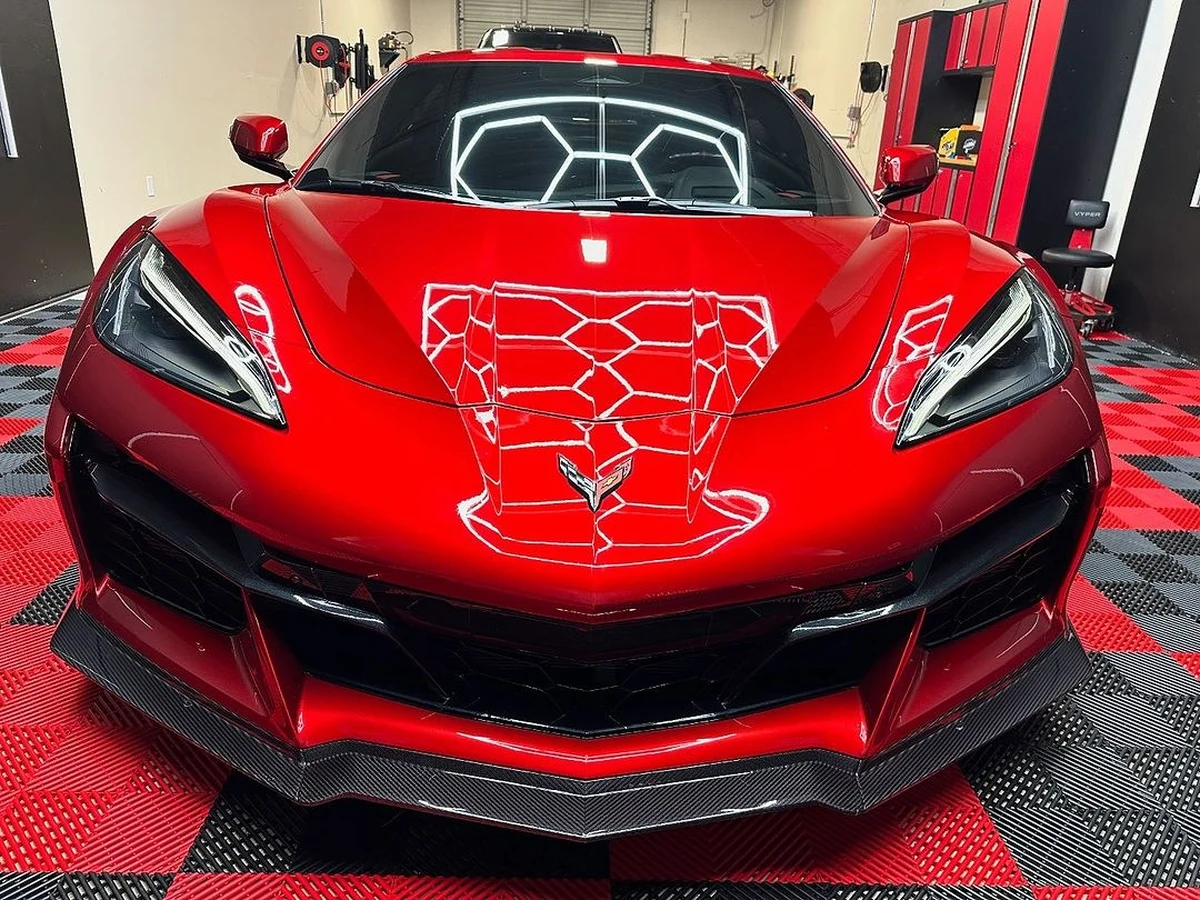
Ceramic coating and paint protection film show up in the same conversation constantly, and it is easy to see why. Both promise to keep your paint looking new. Both get talked about in the same breath as an upgrade worth adding to a new car. But they are not the same thing, they do not solve the same problem, and picking the wrong one for what you actually need can leave you disappointed. Here is a straight answer from a shop that installs both every week.
What ceramic coating actually does
Ceramic coating is a thin liquid layer, applied by hand and cured onto the surface, that bonds to your factory clear coat. Once it cures, it changes how the paint behaves:
- Water beads up and rolls off instead of sitting and spotting.
- Dirt, brake dust, and road grime have a harder time sticking, so washes are faster and easier.
- The surface gets a deeper, glossier look that holds up over time.
- It adds a layer of chemical resistance against UV fading and light environmental etching.
What ceramic coating is not built for is impact. It is measured in microns, so it does not stop a rock chip, a key scratch, or a door ding. Think of it as protecting the finish and the shine, not the panel underneath.
What paint protection film actually does
Paint protection film, or PPF, is a clear, durable urethane film applied on top of the paint. It is thick enough to physically absorb the things that actually damage a panel:
- Rock chips and road debris kicked up on the highway.
- Light scratches and scuffs from car washes, bags, and daily use.
- Bug splatter and bird droppings, which can etch into clear coat if left too long.
Premium film is also self-healing, so light swirl marks in the film disappear with a little heat from the sun or warm water. Underneath, your factory paint stays exactly as it was the day you drove off the lot. PPF is a sacrificial layer that takes the hit so your paint does not have to.
The core difference
The simplest way to think about it: ceramic coating is a chemical layer that makes the surface easier to keep clean and glossy, while PPF is a physical layer that stops damage before it reaches the paint. Ceramic coating will not stop a rock chip. PPF will not add the same slick, hydrophobic shine on its own, though it can be topped with a coating to get that effect too.
Neither one is an upgrade over the other, because they are not competing for the same job. Asking whether ceramic coating or PPF is "better" is a bit like asking whether sunscreen or a jacket is better. It depends on what you are protecting against.
Can you use both together?
Yes, and it is one of the most common combinations we install. PPF goes on the high-impact areas first, usually the front bumper, hood, fenders, and mirrors, to handle chips and road debris. A ceramic coating then goes over the film itself, and often over the rest of the car's paint, so the whole vehicle gets the same easy-clean, glossy finish. You end up with impact protection where you need it most and a consistent, slick look everywhere else.
Which one does your car need?
If your biggest worry is rock chips on the front of the car, especially on a daily highway commute or a vehicle with softer factory paint like many Teslas and EVs, start with PPF on the front end. If you mainly want a car that beads water, stays cleaner longer, and holds a deeper shine between washes, ceramic coating is the better fit on its own. If you want both problems solved at once, the front-partial PPF plus full-car ceramic coating combination covers it.
Not sure which makes sense for your car and how you drive? Tell us about it and we will walk you through the options honestly. You can read more on our paint protection page or our ceramic coating page, or get a free quote below.